Moles


Moles are insectivores, meaning they primarily feed on insects and earthworms. While they can help reduce certain insect populations, their tunneling activity often causes significant damage to lawns and landscaped areas. This damage typically appears as raised surface tunnels and soil mounds that can be unsightly, disrupt root systems, and create uneven ground. Mole tunnels may also provide travel routes for other small mammals.
If left unmanaged, mole activity can expand across neighbouring residential properties. Because moles rely on extensive tunnel systems for feeding and shelter, control becomes more challenging the longer they are allowed to establish and expand their networks.
On larger properties, mole activity may shift from one section of the lawn to another. Their movement is influenced by soil moisture, seasonal weather conditions, and the availability of food. As insect populations change throughout the year, moles will relocate to areas where feeding conditions are best. If disturbed, they may temporarily abandon an area but often return once conditions stabilize. In some cases, mole activity in a specific section of lawn may last only one to two weeks before moving elsewhere.
In British Columbia, the primary mole species is Townsend’s mole. Coast moles are common in Washington and Oregon but are rare and not widely established in BC.
Townsend’s Moles
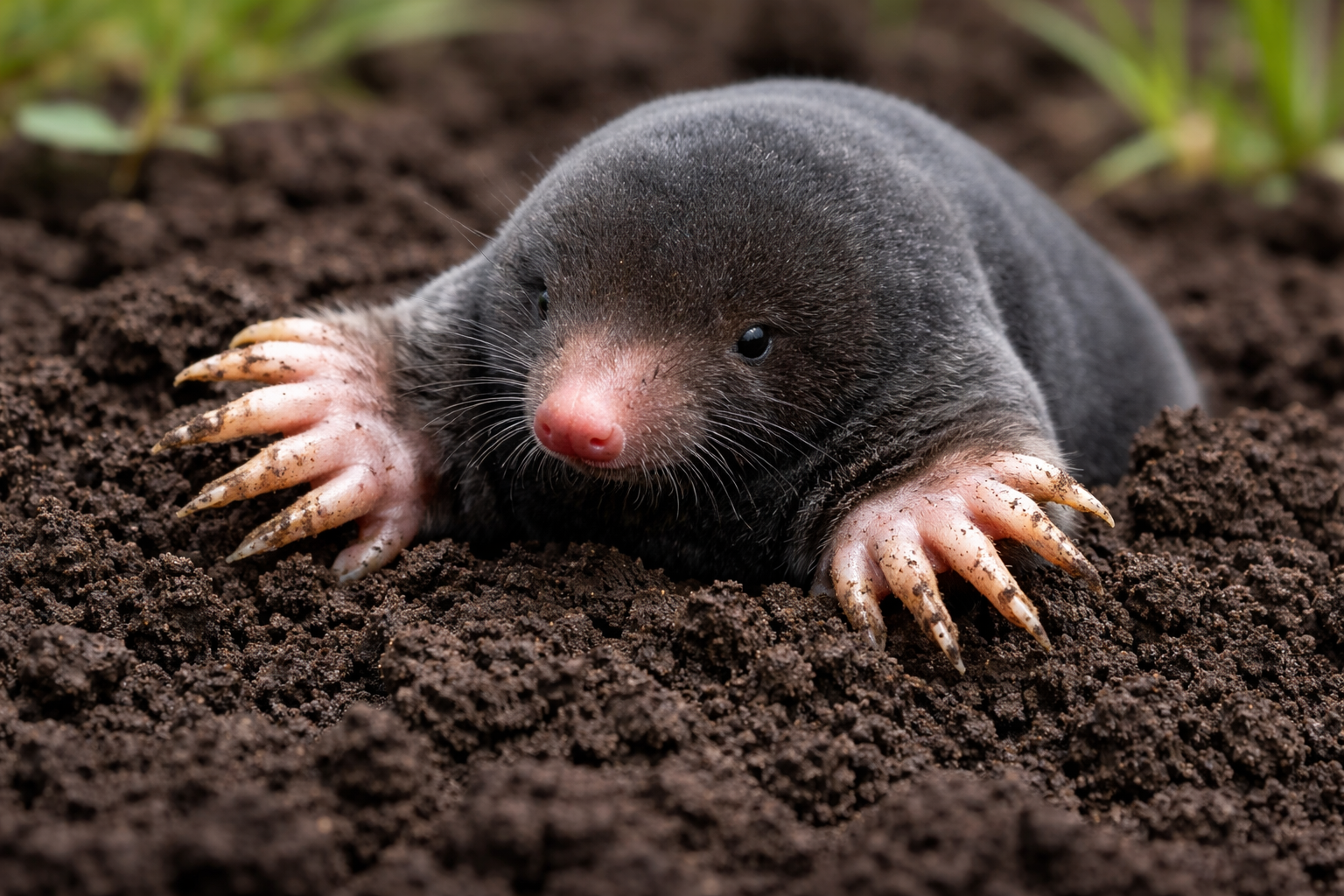
Size: Typically 180–220 mm in total body length (making them the largest mole species in North America).
Color: Dense, velvety dark brown to black fur.
Unique Characteristics: Townsend’s moles are active year-round and do not hibernate. Breeding occurs in late winter (usually February–March), and females typically produce one litter per year, averaging 2–4 pups. They prefer moist, well-drained soils and are commonly found in fields, lawns, farmland, and lowland wooded areas. Their primary food source is earthworms, although they will also consume insects and larvae.
Control: Control methods typically involve placing properly set scissor or harpoon-style mole traps in active surface tunnels. Flagging trap locations helps with monitoring and safety. Timing and correct tunnel identification are critical for effective control.
Enjoy a Smooth, Damage-Free Lawn
Homeowners across Metro Vancouver and the Fraser Valley trust us to keep their lawns smooth, healthy, and protected. Whether you’re dealing with fresh molehills or ongoing tunnel damage, our team is here to help with prompt service and dependable results.
Schedule your consultation today and enjoy peace of mind knowing your property is in experienced local hands.